

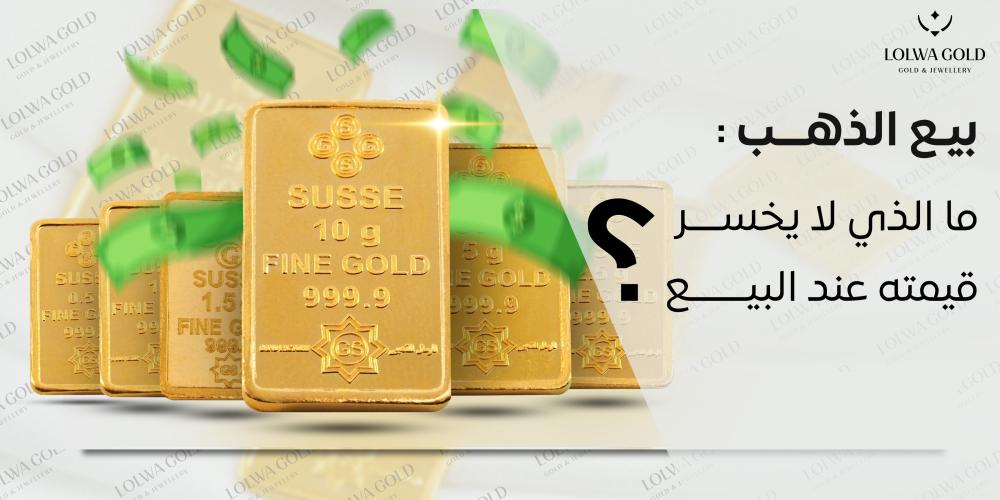
In a world of fluctuating economies and volatile markets, gold remains one of the safest and most stable assets over time. However, despite being considered a safe haven, many people are surprised by the loss in value of their gold when they sell it. What is the reason for this? And are there types of gold that retain their value upon resale?
In this comprehensive guide, we answer this common and frequently asked question: What gold does not lose value when sold? We show you how to make smart investment decisions that preserve the value of gold and generate profit when you need to sell it.
First: Why do some people lose money when selling gold?
When buying gold, many people don't realize that the price they paid isn't fully recovered upon resale. This is due to several factors, most notably:
- Manufacturing cost: This is the cost of manufacturing the gold piece, and it is often not included in the sale price.
- Design: The more complex or branded the design, the more it costs and loses money when sold.
- Condition: Scratches or wear reduce the value of the item.
- Timing: Selling gold when the market price is low leads to an immediate loss.
Therefore, knowing which type of gold retains its value or reduces loss has become a necessity for anyone who buys gold, whether for adornment or investment.
Second: What is the type of gold that does not lose value when sold?
Although all types of gold are subject to market changes, there are specific types of gold that can be considered "investment" because they retain their value when sold or lose very little:
1. Gold bullion
Bullion is the first choice for investors seeking profit rather than mere decoration. Its advantages include:
- 24-karat gold (99.9% purity) .
- It does not include manufacturing or design , just net weight.
- It is easily bought and sold according to the global gold price.
The smaller the ingot size (e.g., 10 or 20 grams), the more readily it can be liquefied without significant losses.
2. Gold liras (gold coins)
- Such as the Rashadi lira, the English lira, or the Swiss lira.
- Its weight and caliber are known and fixed.
- It enjoys constant demand, making it easy to sell at market price without a large discount.
3. Raw, unworked gold
- Such as plain gold pieces or gold without decoration.
- There is no manufacturing fee.
- It is sold as gold by weight, and is calculated only on the basis of purity and weight.
4. Traditional gold with low manufacturing costs
- It consists of jewelry with popular or simple designs.
- It uses fewer manufacturing tools, which reduces the cost of labor.
- Maintain a price closer to the market price when selling.
Third: Types of gold that lose the most when sold
1. White gold
It is made with a mixture of gold and metals such as palladium or nickel, and is coated with a rhodium layer that loses its shine over time and needs periodic renewal.
In addition, the manufacturing cost is often higher than for yellow gold, which makes the loss when selling greater.
2. Gold decorated with precious stones
In most cases, the value of gemstones is not taken into account when reselling them, even if they are of good quality.
The item is valued only according to the weight of the gold, which means that the price paid at the time of purchase is not fully refunded.
3. Gold made from global brands
Although gold from international brands may be distinguished in design and quality, the high manufacturing costs lead to a significant loss when selling, especially in markets that do not value the brand but only care about the weight and carat.
Fourth: Is all 24-karat gold the best when selling?
24-karat gold is the purest form of gold, but it's not necessarily the best choice in every situation. It is:
- Excellent for investment (such as bullion).
- It is weak in terms of hardness , so it is not used much in everyday jewelry.
- It may not always be available in small jewelry stores.
If you are looking for pieces that will be used and later sold, 21-karat gold is the perfect balance of purity, durability, and price.
Fifth: When is the right time to sell gold?
Choosing the right time to sell is just as important as the type of gold itself. Here are some indicators:
- The price of gold is rising globally : Follow the global markets and stock exchange.
- High local demand increases the chances of selling at a good price.
- No need to sell immediately : The less rushed you are, the greater the chances of selling at a fair price.
Sixth: How to avoid losses when selling gold?
- Buy gold with the intention of selling it as an investment, in addition to gold used for jewelry.
- Keep the invoices.
- Check the weight and caliber before purchasing.
- Deal with reputable shops that offer fair buying and selling prices.
- Monitor the price of gold regularly to avoid selling during a period of decline.
- Ask about the manufacturing cost when buying, and find out how much of it is not included when selling.
Seventh: What does the "Pearl Shine" store offer you to guarantee a fair sale without loss?
At Pearl Shine , we believe that transparency and credibility in buying and selling are fundamental, and that's why we guarantee you:
- Selling certified bullion at market prices.
- Clearly state the manufacturing details when purchasing.
- Issuing certificates of authenticity for each piece.
- Provide a professional appraisal when you wish to resell.
- A specialized team will guide you to the right investment option.

Gold will remain a safe haven, but not all gold pieces are created equal when it comes to selling. A piece that glitters in a shop window may lose its value once it reaches your hands if you don't choose wisely.
Therefore, understanding which types do not lose their value, and choosing the right time to sell, are the keys to successful gold investment.